Heart rate variability (HRV) is defined as the beat-to-beat variation in time between heartbeats, reflecting how well your autonomic nervous system balances stress and recovery. Weight loss improves HRV by reducing sympathetic nervous system overactivation caused by excess body fat, particularly visceral fat. Research shows that losing 5 to 10 percent of total body weight produces measurable improvements in key HRV metrics, including SDNN and RMSSD, within weeks of starting a weight loss program. The effect is not cosmetic. It is a direct physiological shift in how your heart and nervous system communicate.
How weight loss improves HRV: the core mechanism
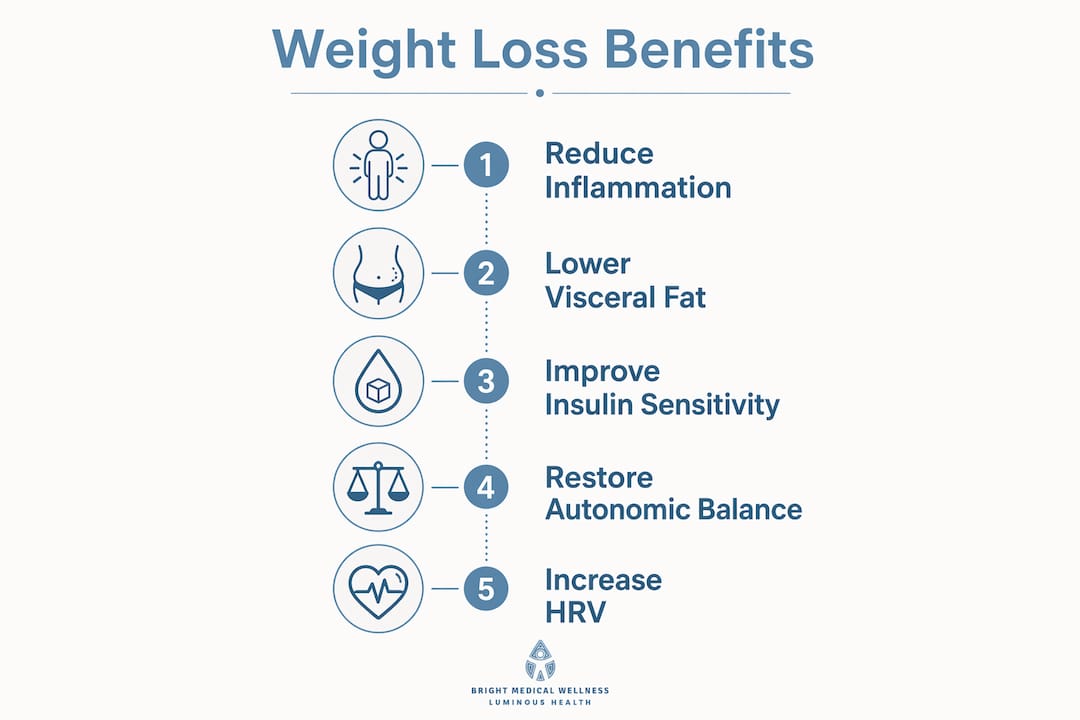
Excess body fat, especially visceral fat stored around the organs, drives chronic low-grade inflammation. That inflammation suppresses parasympathetic (rest-and-digest) activity and pushes the autonomic nervous system toward sympathetic (fight-or-flight) dominance. The result is a lower HRV, a faster resting heart rate, and a cardiovascular system that never fully recovers between beats.
Weight loss reverses this pattern by reducing the inflammatory load that keeps the sympathetic nervous system overactive. As visceral fat decreases, parasympathetic tone, measured through the vagus nerve, begins to recover. This restoration shows up directly in HRV readings. SDNN (standard deviation of normal-to-normal intervals) and RMSSD (root mean square of successive differences) both rise as the autonomic system rebalances.

Insulin sensitivity also plays a role. Excess fat promotes insulin resistance, which compounds autonomic dysfunction. As weight drops and insulin sensitivity improves, the nervous system regains its ability to modulate heart rhythm efficiently. Clinical nutrition systematic reviews confirm that sympathovagal balance improves with sustained fat loss, not just temporary caloric restriction.
What is the relationship between obesity, autonomic dysfunction, and HRV?
Obesity does not just add weight. It actively disrupts the autonomic nervous system in ways that raise cardiovascular risk. Research on university students found that obese females showed SDNN values of 39.74 ± 12.52 ms compared to 55.06 ± 15.77 ms in normal-weight peers. Their resting heart rate averaged 89.75 bpm versus 80.82 bpm. That gap represents a meaningful difference in how much cardiovascular stress the body carries at rest.
| HRV Metric | Obese Group | Normal-Weight Group |
|---|---|---|
| SDNN (ms) | 39.74 ± 12.52 | 55.06 ± 15.77 |
| Resting Heart Rate (bpm) | 89.75 | 80.82 |
The data shows a clear pattern. Higher body mass correlates with lower parasympathetic activity and higher sympathetic dominance. This is not random variation. Visceral fat releases inflammatory cytokines that directly interfere with vagal signaling, the nerve pathway responsible for slowing the heart and promoting recovery.
Key autonomic effects of obesity include:
- Reduced SDNN and RMSSD, indicating poor beat-to-beat flexibility
- Elevated resting heart rate from sustained sympathetic drive
- Decreased high-frequency (HF) power, reflecting reduced vagal tone
- Increased low-frequency to high-frequency (LF/HF) ratio, a marker of sympathetic dominance
Pro Tip: Resting heart rate and HRV move together. If your resting heart rate is consistently above 80 bpm, your HRV is likely suppressed. Both metrics respond to the same autonomic imbalance, so tracking both gives you a fuller picture of cardiovascular stress.
How does weight loss physiologically improve heart rate variability?
A 3-month nutrition program in adults with obesity produced statistically significant changes in both LF and HF measures (p<0.001), indicating a shift toward parasympathetic dominance and a more relaxed nervous system. Cholesterol and blood sugar levels also improved alongside HRV gains. This confirms that weight loss does not improve HRV in isolation. It triggers a cascade of metabolic corrections that collectively restore autonomic balance.
The physiological pathway works in several steps:
- Visceral fat decreases, reducing inflammatory cytokine output
- Systemic inflammation drops, relieving pressure on the vagus nerve
- Parasympathetic tone recovers, increasing HF power in frequency-domain HRV
- Insulin sensitivity improves, further stabilizing autonomic signaling
- LF/HF ratio normalizes, reflecting a healthier sympathovagal balance
Losses greater than 10% of body weight produce additional frequency-domain HRV improvements, including increased HF power and a lower LF/HF ratio. These gains go beyond what time-domain metrics like SDNN capture. They reflect a deeper shift in how the nervous system allocates control between its two branches.
Targeting visceral fat reduction through resistance training and proper nutrition accelerates HRV improvements more than focusing on scale weight alone.
Pro Tip: The scale does not distinguish between fat and muscle. Two people who lose the same number of pounds can have very different HRV outcomes depending on what they lost. Prioritize fat loss, especially visceral fat, over total weight reduction.
What impact do different weight loss approaches have on HRV improvements?
Not all weight loss produces the same HRV benefit. The method matters as much as the result. Research on elite wrestlers found that rapid weight loss up to 5% of body weight increased the LF/HF ratio without improving SDNN or RMSSD. That means sympathetic activity went up while parasympathetic recovery stayed flat. The cardiovascular system was under more stress, not less.
Aggressive caloric deficits trigger a stress response. The body interprets severe restriction as a threat, activating the sympathetic nervous system and temporarily suppressing HRV. This is why short-term aggressive deficits can lower HRV even as body weight drops. The benefit comes later, with sustained, moderate loss.
| Weight Loss Approach | HRV Effect | Key Risk |
|---|---|---|
| Rapid loss (crash diet) | Temporary HRV suppression | Muscle loss, sympathetic spike |
| Moderate, sustained loss | Gradual HRV improvement | Requires patience and consistency |
| Loss with resistance training | Best HRV gains | Requires structured program |
| Loss without muscle preservation | Limited HRV benefit | Autonomic function stays impaired |
Moderate weight loss combined with resistance training and adequate protein intake preserves muscle mass and amplifies HRV improvements. Muscle mass correlates positively with autonomic function. Losing muscle while losing fat removes one of the body’s key buffers against sympathetic overactivation.
Practical principles for protecting HRV during weight loss:
- Target a caloric deficit of 300–500 calories per day rather than extreme restriction
- Include resistance training at least twice per week to preserve lean mass
- Consume adequate protein (typically 0.7–1.0 grams per pound of body weight)
- Treat HRV dips in the first few weeks as normal, not as failure
Pro Tip: If your HRV drops sharply in the first two weeks of a new diet, do not panic. That dip is often a stress response to caloric restriction, not a sign of cardiovascular damage. Sustainable plans produce HRV gains within 4–8 weeks.
How can you monitor and maximize HRV improvements during weight loss?
HRV tracking tools like Garmin, Polar, Apple Watch, and Whoop measure SDNN, RMSSD, and HF power continuously. These metrics give you real feedback on how your autonomic system is responding to your weight loss approach. A data-driven approach to weight loss uses these numbers to adjust training load, caloric intake, and recovery before problems compound.
Set your initial weight loss target at 5–10% of total body weight. That range produces measurable HRV gains without the autonomic stress of aggressive restriction. Once you reach that threshold, reassess and continue if appropriate. The autonomic benefits compound with each additional percentage of fat lost, especially visceral fat.
Key steps to maximize HRV improvements through weight loss:
- Establish a baseline HRV reading before starting your program using a wearable device
- Set a moderate caloric deficit and track weekly, not daily, weight trends
- Add resistance training twice per week to protect muscle mass and autonomic function
- Prioritize 7–9 hours of sleep per night, as sleep quality directly raises HRV
- Manage stress through structured recovery practices like walking, breathing exercises, or yoga
- Monitor HRV trends over 4-week periods rather than reacting to single readings
Common pitfalls that suppress HRV during weight loss include crash dieting, ignoring muscle loss, chronic sleep restriction, and overtraining without recovery. Each of these activates the sympathetic nervous system and offsets the autonomic gains from fat reduction.
Pro Tip: Use HRV trends over 4-week windows, not daily readings, to evaluate whether your weight loss approach is improving autonomic balance. Single readings fluctuate with hydration, alcohol, and sleep. The trend is the signal.
A longevity-focused weight loss plan integrates all of these elements. It treats HRV as a health outcome, not just a fitness metric, and adjusts the program based on how the body responds over time.
Key Takeaways
Weight loss improves HRV by reducing visceral fat, lowering systemic inflammation, and restoring parasympathetic tone, with measurable gains beginning at 5–10% body weight reduction.
| Point | Details |
|---|---|
| HRV reflects autonomic balance | SDNN and RMSSD rise as sympathetic overactivation decreases with fat loss. |
| Visceral fat is the primary target | Reducing visceral fat lowers inflammation and restores vagal tone faster than general fat loss. |
| Rapid weight loss can backfire | Crash diets increase the LF/HF ratio and suppress HRV despite reducing scale weight. |
| Muscle preservation amplifies gains | Resistance training and adequate protein intake protect autonomic function during a caloric deficit. |
| Track trends, not single readings | Four-week HRV trends reveal whether your approach is working; daily readings are too noisy to act on. |
What I’ve learned watching HRV respond to weight loss
Most people come to weight loss focused entirely on the scale. HRV rarely enters the conversation until something goes wrong, like a cardiac event or a persistent fatigue that no amount of sleep fixes. That is backwards. HRV is one of the earliest signals that the body is under chronic stress, and it responds to fat loss faster than most people expect.
What I have seen consistently is that the method of weight loss matters more than the speed. Clients who lose weight gradually while preserving muscle show HRV improvements within 4–8 weeks. Those who crash diet often see their HRV drop before it rises, and some never fully recover the autonomic gains they could have had with a steadier approach.
The other underappreciated factor is visceral fat. Two people can lose the same number of pounds and have completely different HRV outcomes depending on where the fat came from. Subcutaneous fat loss matters less to the autonomic system than visceral fat reduction. Resistance training and a protein-adequate diet are the most reliable tools for targeting visceral fat specifically.
HRV is not a vanity metric. It is a direct window into cardiovascular and autonomic health. Treating it as a primary outcome of weight management, rather than an afterthought, changes how you approach the entire process.
— Bright
Brightmedicalwellness programs for weight loss and HRV
Brightmedicalwellness offers medical weight loss programs built around GLP-1 medications like Semaglutide and Tirzepatide. These medications support sustainable fat loss by reducing appetite, improving blood sugar control, and lowering cardiovascular risk factors, all of which contribute to better autonomic balance and improved HRV over time.

If you are ready to take a structured, medically supervised approach to fat loss, the Brightmedicalwellness GLP-1 dose calculator helps you identify the right starting point for your program. For a broader look at what a medically guided program includes, the medical weight loss program page outlines how nutrition, medication, and lifestyle support work together to produce lasting results.
FAQ
Does losing weight actually increase HRV?
Yes. Losing 5–10% of total body weight produces measurable increases in SDNN and RMSSD within weeks, with greater frequency-domain improvements at higher levels of weight loss.
How long does it take to see HRV improvements after weight loss?
Most people see meaningful HRV changes within 4–8 weeks of sustained, moderate weight loss. Aggressive caloric restriction can temporarily suppress HRV before it improves.
Why does visceral fat affect HRV more than other fat?
Visceral fat releases inflammatory cytokines that directly suppress vagal tone and drive sympathetic overactivation. Reducing visceral fat lowers that inflammatory load faster than losing subcutaneous fat.
Can rapid weight loss harm HRV?
Yes. Research on elite wrestlers shows that rapid weight loss increases the LF/HF ratio without improving time-domain HRV metrics, indicating greater sympathetic stress rather than autonomic recovery.
What HRV metrics should I track during weight loss?
Track SDNN and RMSSD for time-domain changes, and monitor HF power and the LF/HF ratio for frequency-domain shifts. Use 4-week trend averages rather than daily readings for accurate assessment.
Recommended
- Why BHRT and GLP-1s are a Game-Changer for Menopausal Weight Loss – Bright Medical Wellness | Weight Loss & Wellness
- What Is Sustainable Weight Loss? A Practical Guide | Weight Loss & Wellness
- Build a Longevity-Focused Weight Loss Plan That Lasts | Weight Loss & Wellness
- Quantified Self Weight Loss: Your Data-Driven Guide | Weight Loss & Wellness

