If you’re looking for medically supervised weight loss options beyond Bhatti Weight Loss Center, several strong alternatives exist across the United States. The most credible programs share three features: board-certified physician oversight, multi-specialty care teams, and evidence-based treatment protocols. Here is a clear starting point:
- Medically supervised programs at institutions like Brigham and Women’s Hospital offer calorie-controlled plans, meal replacements, and FDA-approved prescription medications managed by registered dietitians and physicians.
- Multi-specialty medical weight loss clinics such as the program at Columbia Surgery combine GLP-1 and GIP receptor agonist medications with surgical coordination, nutrition guidance, and behavioral support.
- Endoscopic and non-surgical procedures including gastric balloons and endoscopic sleeve gastroplasty provide a middle ground between medication and bariatric surgery.
- GLP-1 medication programs like those offered by Brightmedicalwellness deliver Semaglutide and Tirzepatide alongside metabolic health support, without requiring surgery or a hospital-based referral.
Your best fit depends on your BMI, medical history, weight loss goals, and budget. The sections below break down each category in practical detail.
1. Medically supervised weight loss programs in the United States
Medically supervised programs are the most structured alternative to a single-provider practice like Bhatti Weight Loss Center. They place a board-certified physician at the center of your care, coordinating with dietitians, behavioral specialists, and sometimes endocrinologists.
Key features you should expect from a credible program:
- Calorie-controlled and meal replacement plans designed by registered dietitians, with regular physician check-ins to adjust targets based on progress and lab results.
- Prescription medication management, including GLP-1 receptor agonists such as Wegovy and Zepbound, which slow digestion and reduce appetite by mimicking the hormone glucagon-like peptide 1.
- Multi-specialty team coordination where surgeons, endocrinologists, nutritionists, and behavioral health providers collaborate on a single plan, as practiced at Columbia Surgery’s Medical Weight Loss Management Program.
- Ongoing monitoring for metabolic markers, blood pressure, and cholesterol, because obesity is a chronic disease that requires continuous management, not a one-time fix.
- Behavioral and nutrition support to address the lifestyle factors that medication alone cannot resolve.
Pro Tip: Ask any program whether their physician is board-certified in obesity medicine. That credential signals training specific to weight management, not just general internal medicine.
The role of a clinical team in long-term success is well established. Programs that combine pharmacological treatment with behavioral coaching consistently outperform those that rely on medication alone.

2. Non-surgical and less invasive alternatives to bariatric surgery
Not every patient needs or wants surgery. Endoscopic procedures and pharmacological treatments now offer meaningful weight loss with shorter recovery times and lower procedural risk than traditional bariatric surgery.
- Gastric balloon: A silicone balloon is placed in the stomach for approximately six months, reducing stomach volume and food intake. Patients can expect up to 15% body weight loss with this approach. The procedure is approved for people with a BMI of 30–40.
- Endoscopic sleeve gastroplasty (ESG): A specialist places internal stitches to reduce stomach volume by 70%. Patients typically lose about 20% of body weight, with more predictable results than a gastric balloon. The stitches are reabsorbed by the body within roughly a year.
- Gastric injections (botulinum toxin): These injections freeze stomach muscles to slow digestion and promote fullness. The procedure takes about 10 minutes, can be repeated after six months, and typically produces 5%–10% weight loss. It suits patients with moderate or cosmetic weight loss goals.
- GLP-1 and GIP receptor agonists: Medications like Semaglutide and Tirzepatide mimic surgical outcomes for many patients by reducing appetite and slowing gastric emptying. They are a genuine alternative to surgery for patients who do not meet surgical criteria or prefer to avoid procedures. Reviewing GLP-1 provider options can help you identify programs that fit your situation.
Unlike bariatric surgery, which can require months of preparation and several days of hospital recovery, endoscopic procedures are outpatient and typically completed in a few hours. The tradeoff is that weight loss outcomes are less dramatic than surgical options. Patient eligibility for endoscopic procedures generally requires a BMI between 30 and 40 and no prior stomach surgery.
3. Cost considerations and insurance coverage for weight loss treatments
Cost is one of the most practical factors when comparing weight loss center alternatives. Prices vary widely depending on whether you choose a surgical, endoscopic, or medication-based program.
What insurance typically covers:
- Physician visits and lab work within a medically supervised program are usually covered when obesity-related diagnoses are documented.
- FDA-approved prescription weight loss medications are increasingly covered, though prior authorization requirements vary by plan.
- Meal replacement plans and supplements are rarely covered by insurance, making them a significant out-of-pocket expense even when the rest of your program is covered.
What you typically pay out of pocket:
- Endoscopic procedures like gastric balloons and ESG are often not covered and can represent a substantial upfront cost.
- Gastric injections are generally considered elective and are not covered by most insurance plans.
- Monthly GLP-1 medication costs vary depending on your insurance tier and whether a manufacturer savings program applies.
Practical steps before committing:
- Verify your specific insurance plan’s coverage for obesity medicine visits and GLP-1 prescriptions before your first appointment.
- Ask the program whether they assist with prior authorization for medications.
- Factor in the full cost of a program, including behavioral counseling and nutrition support, not just the medication or procedure fee.
Choosing the right path also depends on your goals. Moderate weight loss targets may be well served by appetite control medications, while patients with severe obesity and significant metabolic complications may need surgical evaluation. A personalized assessment from a board-certified physician is the most reliable way to match treatment to need.
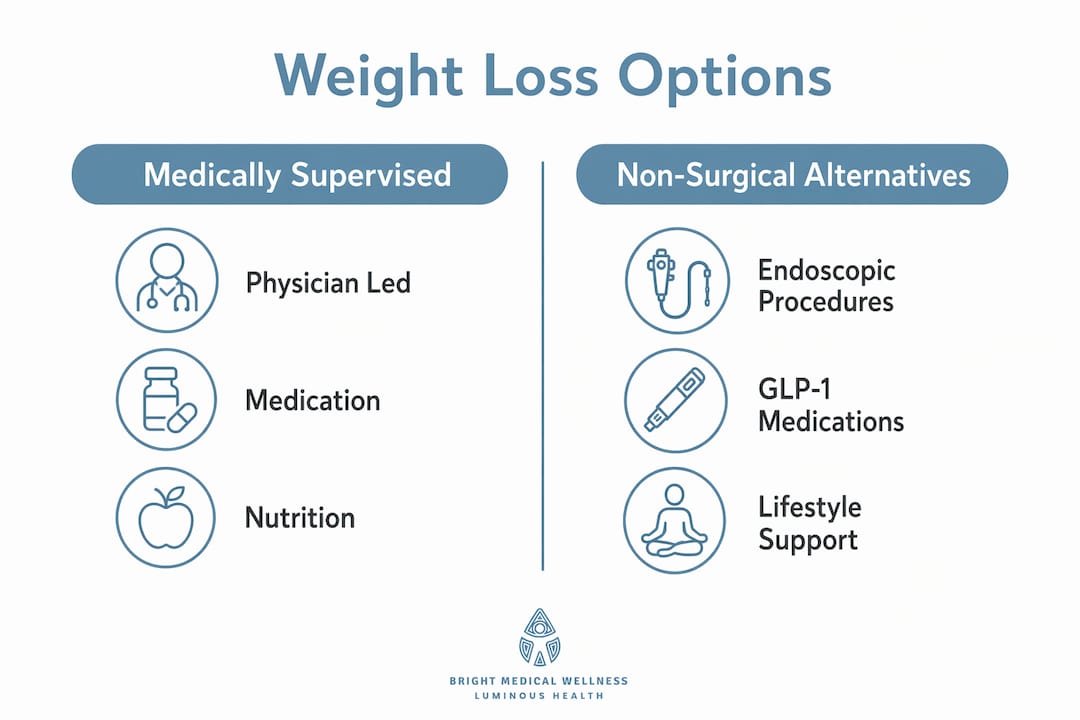
Brightmedicalwellness: a GLP-1 focused alternative worth considering
If you want medically supervised weight loss without navigating a hospital-based referral system, Brightmedicalwellness offers a direct path to GLP-1 medication programs including Semaglutide and Tirzepatide. The focus is on sustainable weight loss paired with metabolic health improvements, addressing blood sugar, cardiovascular risk, and the mental preoccupation with food that makes long-term adherence difficult.

Brightmedicalwellness structures its programs around the same evidence-based principles that define top-tier medical weight loss clinics, with the added benefit of accessibility for patients who may not have a major academic medical center nearby. Key features include:
- GLP-1 and GIP receptor agonist programs with physician oversight
- Metabolic health monitoring covering blood glucose, blood pressure, and cholesterol
- Nutrition and behavioral support to complement pharmacological treatment
- A longevity-focused weight loss plan that extends beyond the scale to address chronic disease risk
You can use the GLP-1 dose calculator on the Brightmedicalwellness website to get a clearer picture of where a medication program might start for you. For patients already familiar with GLP-1 options and comparing providers, the medical weight loss program page outlines the full scope of services.
FAQ
What is the highest rated weight loss program?
No single program holds a universal top rating, but programs combining board-certified physician oversight, FDA-approved medications, and behavioral support consistently produce the best long-term outcomes. Institutions like Brigham and Women’s Hospital and Columbia Surgery are widely recognized for their evidence-based approaches.
What are the non-surgical alternatives to bariatric surgery?
The main non-surgical options are GLP-1 receptor agonist medications (such as Semaglutide and Tirzepatide), endoscopic sleeve gastroplasty, gastric balloons, and gastric injections. Endoscopic sleeve gastroplasty typically produces about 20% body weight loss, placing it between medication and surgery in terms of outcomes.
How much does a weight loss procedure cost without insurance?
Costs vary by procedure type and provider. Endoscopic procedures and gastric balloons are generally not covered by insurance and represent a significant out-of-pocket expense. GLP-1 medications may be partially covered depending on your plan, but meal replacements and supplements are rarely reimbursed.
What programs are similar to structured medical weight loss clinics?
Programs that combine physician-led medication management with nutrition counseling and behavioral support are the closest equivalent. Brightmedicalwellness offers this structure with a specific focus on GLP-1 medications, making it a practical alternative for patients who want medical supervision without a surgical referral.
Do GLP-1 medications cause weight regain if you stop taking them?
Yes. Discontinuing GLP-1 medications frequently leads to weight regain, which is why long-term lifestyle changes and behavioral support are considered essential alongside pharmacological treatment.
Key Takeaways
Medically supervised programs with board-certified physicians, multi-specialty teams, and evidence-based treatments are the most reliable alternatives to any single weight loss center.
| Point | Details |
|---|---|
| Non-surgical options exist | Endoscopic sleeve gastroplasty produces about 20% body weight loss; gastric balloons produce up to 15%. |
| GLP-1 medications are effective | Semaglutide and Tirzepatide reduce appetite and slow digestion, offering surgical-level results for eligible patients. |
| Insurance coverage is uneven | Physician visits and prescriptions are often covered; meal replacements and endoscopic procedures usually are not. |
| Stopping medication risks regain | GLP-1 benefits require consistent use; discontinuation frequently leads to weight returning without lifestyle support. |
| Brightmedicalwellness offers GLP-1 programs | Brightmedicalwellness provides Semaglutide and Tirzepatide programs with metabolic monitoring and behavioral support. |

