GLP-1 receptor agonists are defined as a class of medications that reduce seizure risk by 16–24% in adults with type 2 diabetes, according to multiple clinical studies and meta-analyses. This neuroprotective effect goes well beyond blood sugar control. Medications like semaglutide and liraglutide show measurable reductions in both seizure recurrence and new-onset epilepsy. For anyone researching GLP-1 seizure risk reduction, the evidence is substantial enough to take seriously, even though prospective clinical trials are still needed to confirm causality.
What does research show about glp-1 seizure risk reduction?
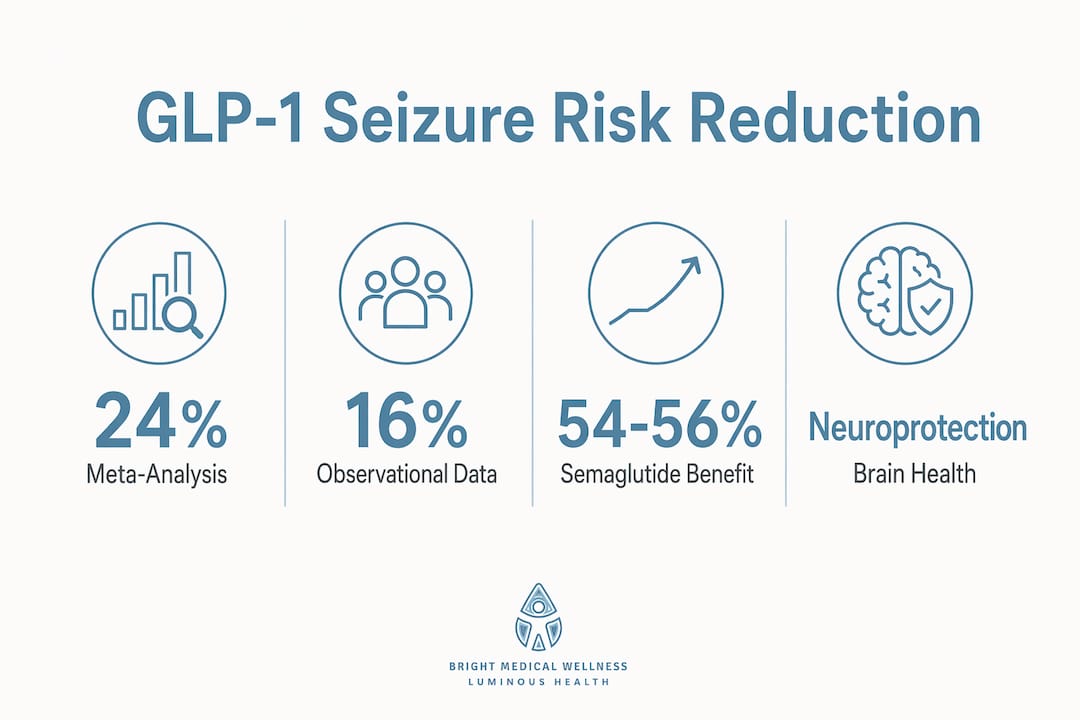
The clinical data on GLP-1 receptor agonists and seizure outcomes is more consistent than most people expect. Meta-analyses show that GLP-1 receptor agonists reduce the risk of late-onset seizures and epilepsy by approximately 24%, with a relative risk of 0.76 (95% CI: 0.62–0.95). That number means roughly one in four late-onset seizure events could be prevented in patients who use these medications compared to those who do not.
Real-world observational data adds more weight to this finding. GLP-1 receptor agonist therapy is linked to a 16% lower hazard ratio for incident epilepsy compared to DPP-4 inhibitors, with a hazard ratio of 0.84 (95% CI: 0.78–0.90). DPP-4 inhibitors are another common class of glucose-lowering drugs, so this comparison is clinically meaningful. It shows GLP-1 medications outperform a direct therapeutic alternative on neurological outcomes.
The range of benefit across studies is also notable. A scoping review published in Seizure found that GLP-1 receptor agonists reduce seizure recurrence and severe neurological outcomes with relative risk reductions ranging from 10% to 57%. That wide range reflects differences in patient populations, study designs, and specific medications used. Even at the lower end of 10%, the benefit is clinically relevant for patients who already carry a seizure diagnosis.
Semaglutide stands out among glp-1 medications
Semaglutide, sold under brand names including Ozempic and Wegovy, shows particularly strong results. Semaglutide initiation is associated with a 54–56% reduced risk of adult-onset epilepsy or seizures compared with SGLT2 inhibitors, with hazard ratios of 0.44–0.46 and a number needed to treat of 69 to 129. That means for every 69 to 129 patients treated with semaglutide instead of an SGLT2 inhibitor, one seizure event is prevented. That is a meaningful clinical signal.

The protective effects of GLP-1 receptor agonists are especially pronounced in older adults with new-onset epilepsy, suggesting these medications may influence neurodegenerative and inflammatory pathways relevant to aging. This finding matters because new-onset epilepsy in older adults is often tied to brain inflammation and vascular injury, two areas where GLP-1 medications appear to have direct effects.
How do glp-1 receptor agonists biologically reduce seizure risk?
The biological explanation for GLP-1 effects on seizures involves more than glucose control. Neurologists suggest GLP-1’s neuroprotective benefits may come from reducing neuroinflammation and oxidative stress, though they emphasize current evidence is observational rather than definitive. Neuroinflammation is a known driver of seizure activity, so any medication that dials it down could plausibly reduce seizure frequency.
GLP-1 receptors are expressed throughout the central nervous system, including in the hippocampus and cortex, which are regions directly involved in seizure generation. When GLP-1 receptor agonists bind to these sites, they activate signaling pathways that support neuronal survival and reduce excitotoxicity. Excitotoxicity refers to the process where neurons are damaged by excessive stimulation, a key mechanism in seizure-related brain injury.
Metabolic stability also plays a direct role. Strict blood glucose management via GLP-1 therapy helps prevent acute symptomatic seizures by avoiding severe glucose fluctuations. Both hypoglycemia and hyperglycemia can trigger seizures in susceptible individuals. GLP-1 medications reduce these extremes by improving insulin sensitivity and moderating post-meal glucose spikes.
Pro Tip: If you or a patient is starting a GLP-1 medication and has a history of seizures, ask your neurologist to review your baseline seizure frequency before initiation. This gives you a clear reference point to measure any changes in seizure control over the following months.
The neuroprotective effects of GLP-1 therapies may extend brain health benefits beyond seizure risk, possibly mitigating age-related neurological insults. This broader implication is still under investigation, but it positions GLP-1 medications as candidates for a wider role in brain health, not just metabolic management.
Glp-1 medications vs. other glucose-lowering therapies on seizure outcomes
Not all glucose-lowering medications carry the same neurological benefits. The table below compares GLP-1 receptor agonists against two other common drug classes on seizure-related outcomes.
| Medication Class | Seizure Risk Reduction | Key Data Point |
|---|---|---|
| GLP-1 Receptor Agonists (e.g., semaglutide, liraglutide) | 16–24% vs. DPP-4 inhibitors; 54–56% vs. SGLT2 inhibitors | HR 0.84 vs. DPP-4i; HR 0.44–0.46 vs. SGLT2i |
| DPP-4 Inhibitors (e.g., sitagliptin, saxagliptin) | Reference class | No significant seizure risk reduction demonstrated |
| SGLT2 Inhibitors (e.g., empagliflozin, dapagliflozin) | Less protective than semaglutide | Semaglutide outperforms by 54–56% |
The comparison between GLP-1 receptor agonists and DPP-4 inhibitors is particularly instructive. Both classes lower blood sugar, but only GLP-1 receptor agonists show consistent neurological protection. This suggests the seizure benefit is not simply a byproduct of glucose control. It points to GLP-1-specific mechanisms at work.
Semaglutide’s advantage over SGLT2 inhibitors is also worth noting. SGLT2 inhibitors like empagliflozin have their own cardiovascular and renal benefits, and some researchers have explored their cardio-metabolic benefits in relation to neurological outcomes. But on seizure-specific endpoints, semaglutide currently holds a clear advantage in the available data.
For patients at elevated risk for epilepsy, particularly older adults with type 2 diabetes, the choice of glucose-lowering therapy carries neurological implications. GLP-1 receptor agonists, especially semaglutide, offer the strongest evidence for seizure risk reduction among currently available options. Clinicians managing patients with both diabetes and a seizure history should factor this data into their prescribing decisions.
What practical considerations affect seizure management with glp-1 medications?
One clinical nuance that often gets overlooked is the effect of GLP-1 medications on drug absorption. GLP-1 receptor agonists safely delay gastric emptying00143-3/abstract), which may alter the absorption timing of antiseizure medications without major changes in overall drug exposure. For medications like levetiracetam or lamotrigine, which depend on consistent absorption for stable blood levels, this timing shift could matter.
The practical implication is not that GLP-1 medications are unsafe for people with epilepsy. Clinical evidence confirms that GLP-1 medications like Ozempic do not increase seizure risk. The concern is more about optimizing antiseizure medication performance during the adjustment period after starting a GLP-1 agent.
Monitoring antiseizure medication serum levels may be prudent after starting GLP-1 receptor agonists due to delayed gastric emptying, though no major dose adjustment00143-3/abstract) is generally required. If a patient reports increased seizure frequency shortly after starting a GLP-1 medication, checking drug levels is a reasonable first step before assuming the GLP-1 is the cause.
Pro Tip: If you take antiseizure medications and are starting a GLP-1 therapy, ask your prescriber to schedule a serum drug level check at your first follow-up visit. A single blood draw can confirm your antiseizure medication is still in its therapeutic range.
Glycemic stability remains the foundation of neurological protection in metabolic patients. GLP-1 medications support this stability by reducing post-meal glucose spikes and improving overall glucose variability. For patients whose seizures are triggered by metabolic instability, this effect alone may reduce seizure frequency independent of any direct neurological mechanism. Open communication with both your neurologist and your prescribing clinician is the most effective way to manage this intersection of metabolic and neurological care.
Key takeaways
GLP-1 receptor agonists reduce seizure risk by 16–56% depending on the comparison group, with semaglutide showing the strongest evidence among individual medications studied.
| Point | Details |
|---|---|
| Seizure risk reduction is real | Meta-analyses confirm a 24% lower risk of late-onset seizures with GLP-1 receptor agonists. |
| Semaglutide leads the evidence | Semaglutide reduces adult-onset epilepsy risk by 54–56% compared to SGLT2 inhibitors. |
| Mechanisms go beyond glucose | Neuroinflammation reduction and GLP-1 receptor activity in the brain contribute to seizure protection. |
| Drug absorption requires monitoring | GLP-1 medications delay gastric emptying, which may affect antiseizure medication absorption timing. |
| Evidence is observational | Current data is strong but hypothesis-generating; prospective clinical trials are still needed. |
What the research tells me about glp-1 and brain health
The seizure data on GLP-1 receptor agonists is one of the most underappreciated findings in metabolic medicine right now. Most patients starting semaglutide or liraglutide are thinking about weight loss or blood sugar. Very few realize they may also be reducing their risk of a neurological event.
What I find most compelling is not any single study. It is the consistency across different study designs, patient populations, and comparison groups. When a 24% reduction shows up in meta-analyses and a 54–56% reduction shows up in semaglutide-specific data, that pattern is hard to dismiss as noise.
Neurologists stress that these findings should be viewed as hypothesis-generating rather than practice-changing at this time. I agree with that caution. But I also think it is a mistake to wait for perfect evidence before informing patients. People who are already candidates for GLP-1 therapy deserve to know that the neurological data is trending in a favorable direction.
The patient hesitancy I see most often comes from fear. People with epilepsy worry that a new medication will destabilize their seizure control. The data does not support that fear. What it supports is a careful, monitored transition with attention to antiseizure drug levels. That is manageable, and the potential upside is significant.
— Bright
Start your glp-1 program with expert guidance
If you are weighing GLP-1 therapy for weight management or metabolic health, the neurological benefits are worth factoring into that decision. Brightmedicalwellness offers GLP-1 medication programs built around semaglutide and tirzepatide, with individualized support for clients who have complex health profiles, including those with neurological concerns.

Brightmedicalwellness provides consultations that address the full picture of your health, not just the number on the scale. You can also explore GLP-1 and appetite control to understand how these medications work across multiple body systems. If insurance coverage is a barrier, Brightmedicalwellness offers guidance on navigating insurance for weight loss medications to help you access the treatment you need. Reach out to Brightmedicalwellness to get started.
FAQ
What is glp-1 seizure risk reduction?
GLP-1 seizure risk reduction refers to the measurable decrease in seizure incidence and recurrence observed in patients using GLP-1 receptor agonists like semaglutide and liraglutide. Meta-analyses show approximately a 24% lower risk of late-onset seizures compared to patients not using these medications.
Does semaglutide reduce epilepsy risk?
Yes. Semaglutide is associated with a 54–56% reduced risk of adult-onset epilepsy compared to SGLT2 inhibitors, with hazard ratios of 0.44–0.46. This is the strongest seizure-specific finding for any individual GLP-1 medication in current research.
Can i take glp-1 medications if i already have epilepsy?
Clinical evidence confirms that GLP-1 medications do not increase seizure risk in people with epilepsy. Your prescriber may recommend monitoring antiseizure medication levels after starting a GLP-1 agent due to potential changes in drug absorption timing.
How do glp-1 medications protect the brain?
GLP-1 receptor agonists likely reduce neuroinflammation and oxidative stress, both of which contribute to seizure activity. GLP-1 receptors are also expressed in the brain, where they support neuronal survival pathways. These mechanisms are under active investigation.
Are the neurological benefits of glp-1 medications proven?
The current evidence is observational and consistent across multiple studies, but prospective clinical trials have not yet confirmed causality. Neurologists describe the findings as hypothesis-generating, meaning the data is strong enough to inform clinical decisions but not yet definitive proof.

