Losing weight usually raises your VO2 max when it is expressed per kilogram of body weight, but it does not necessarily raise your body’s actual oxygen-use capacity. What happens to your fitness depends on how the weight comes off and whether you protect muscle while it does. A medically supervised program, paired with a deliberate training plan, is the most reliable way to lose fat and keep your fitness. At Bright Medical Wellness, we build that kind of plan around your labs, your medication and your goals.
TL;DR
- VO2 max is the maximum amount of oxygen your body can use during hard exercise. Most apps and watches show it per kilogram of body weight, so a lower weight can lift the number even if your engine has not changed.
- In a 12-month trial, diet-only weight loss lowered absolute VO2 max by 6.8%, while exercise-based weight loss of a similar size raised it by 15.5%.
- Muscle drives oxygen use, not fat. Protecting lean mass during weight loss protects your fitness.
- High-intensity intervals plus strength work, in line with American Heart Association activity targets, give the best chance of improving VO2 max while you lose weight.
- Fitness watches are rough estimates. Treat the trend, not the single number.
Table of Contents
- What VO2 max measures
- Relative vs. absolute VO2 max
- How the way you lose weight changes the result
- What this means on a GLP-1 program
- How to raise VO2 max while you lose weight
- Why your watch number may mislead you
- Fitness, heart health and the bigger picture
- Perspective
- Getting started with Bright Medical Wellness
- FAQ
- Sources
What VO2 max measures
VO2 max is the highest rate at which your body can take in and use oxygen during maximal effort. The gold standard is a lab test: you exercise to exhaustion on a treadmill or bike while a mask analyzes the air you breathe out. Treadmill results run 10 to 25% higher than cycle results, so compare only like with like.
It matters beyond athletics. A review in the cardiology literature found that higher cardiorespiratory fitness is linked to lower risk of cardiovascular events in women and men, younger and older. In the Finnish Kuopio study, each 1-MET increase in fitness (a MET is a unit of resting energy use) was associated with a 22% lower relative risk of sudden cardiac death.
Relative vs. absolute VO2 max
There are two ways to express the number:
- Absolute VO2 max is liters of oxygen per minute. It reflects the raw capacity of your heart, lungs and muscles.
- Relative VO2 max is milliliters per kilogram of body weight per minute. This is the number most watches and apps display.
Because fat tissue does not use much oxygen during exercise, losing weight can raise relative VO2 max without raising absolute VO2 max. The same review notes that in people with obesity, VO2 max is low per kilogram of body weight but usually normal when compared with fat-free mass or height.
A simple example: someone with an absolute VO2 max of 3.0 L/min who weighs 100 kg scores 30 mL/kg/min. At 90 kg with the same engine, the score is about 33. Nothing got fitter, yet the number rose 10%.
That is not a trick. A lighter body costs less energy to move, so stairs, walks and runs feel easier. A study in children found that after weight loss, heart rate at a set workload dropped from 124 to 102 beats per minute, even though VO2 max relative to fat-free mass was essentially unchanged. Weight loss mainly lowers the cost of everyday effort.
How the way you lose weight changes the result
The most useful evidence comes from a trial by Weiss and colleagues. After 12 months, one group lost about 10.7% of body weight through calorie restriction and another lost about 9.5% through exercise. Absolute VO2 max fell 6.8% with diet alone and rose 15.5% with exercise, and relative VO2 max rose 28.3% in the exercise group. Thigh muscle volume fell 6.9% with diet alone, and that did not happen with exercise.
A follow-up trial with a smaller weight loss of about 7% found the same pattern. Diet alone lowered absolute VO2 max by about 6%, while exercise raised it by about 15%. Relative VO2 max held steady with diet alone, rose 22% with exercise and 13% with diet plus exercise.
What this means for you:
- If you lose weight without training, expect your per-kilogram number to hold or rise slightly while your raw capacity may drop, mostly because of muscle loss.
- If you add structured exercise, you can lose fat and build capacity at once.
- The scale alone does not tell you which of these happened. Body composition does.
This is one reason we pair weight-loss medication with tracking. Our programs use 3D body scanning for accountability, so you can see whether the change is fat or muscle, not only the number on the scale.
What this means on a GLP-1 program
GLP-1 medications such as semaglutide and tirzepatide reduce appetite, so calorie intake drops. That is the point of the treatment, and it is also why movement matters: when intake falls, strength work and aerobic training give your body a reason to hold on to muscle. Our guide on how to exercise safely during a GLP-1 program covers pacing, fueling and warning signs. For a broader comparison, see GLP-1 vs. diet and exercise.
The American Heart Association’s 2026 scientific statement notes that exercise alone is unlikely to produce clinically meaningful weight loss of 5% or more unless activity levels are exceptionally high, and that exercise improves blood pressure, insulin resistance and cholesterol independently of weight loss. Medication handles the weight side. Training handles fitness and muscle. You need both.
If you want ideas for what to pair with your treatment, the best exercise to pair with GLP-1 medications is a useful starting point.

How to raise VO2 max while you lose weight
Hit the weekly activity targets
The AHA statement recommends 150 to 300 minutes a week of moderate aerobic activity, or 75 to 150 minutes of vigorous activity, plus muscle strengthening at least two days a week. It also reports that high-intensity aerobic exercise improves fitness more than moderate exercise, even at matched energy expenditure.
Add intervals
A meta-analysis of 18 randomized trials in adults with obesity found that high-intensity training improved VO2 max more than steady continuous exercise and also reduced body-fat percentage more. Intervals are short hard efforts with recovery between them, such as 4 minutes hard and 3 minutes easy, repeated a few times. If you have heart disease, high blood pressure or other conditions, or you are new to hard exercise, check with your clinician before starting intervals.

Combine cardio and strength
A network meta-analysis of 15 trials with 741 participants found that combined aerobic and resistance training was the most effective for reducing body weight, waist size and fat mass. A Spanish trial of 167 adults pairing calorie restriction with exercise three times a week found improved VO2 peak in overweight and obese men and overweight women. The authors suggested aerobic work at 50 to 60% of heart-rate reserve plus strength work for large muscle groups, three times a week.
Keep strength work non-negotiable
Lean mass is the biggest determinant of VO2 max. Goran and colleagues found fat-free mass was the strongest predictor, with a correlation of 0.87. Two or three full-body sessions a week, with squats, rows, presses and carries, keep the engine large. Our piece on how weight loss improves mobility and movement shows how easier movement makes training more sustainable.
Pace the loss
A classic review of weight reduction and performance suggests that gradual loss of 0.5 to 1.5 kg a week is easier on maximal oxygen uptake than rapid cuts. Slower, supervised loss with adequate protein is gentler on muscle.
Why your watch number may mislead you
Wearables estimate VO2 max from heart rate and pace, and the estimate is rough. A 2025 validation study found that Apple Watch estimates ran a mean of 6.07 mL/kg/min below lab values, with a mean absolute error of 13.31%. A 2026 study of the Pixel Watch 3 found wide individual error and correct fitness-band classification for only 30% of participants.
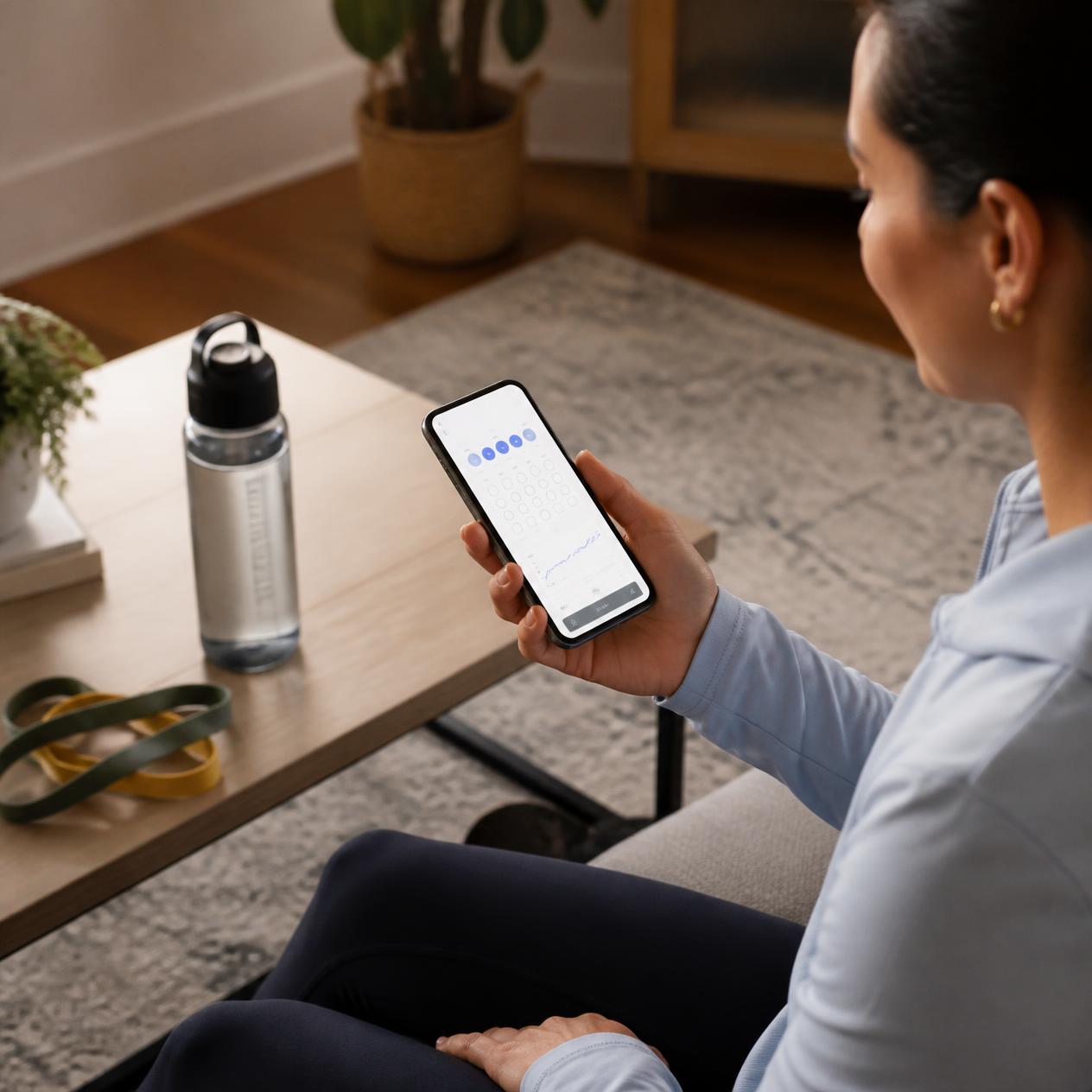
Use your watch for direction over months, not as a verdict. As your weight falls, the displayed number will likely rise even if raw capacity does not, so pair it with measures that do not depend on body weight: resting heart rate, how fast your heart rate recovers, how long you can hold a conversation-pace effort, and your strength numbers in the gym.
Fitness, heart health and the bigger picture
VO2 max is one marker of heart and metabolic health. Blood pressure, heart rate variability and blood sugar matter alongside it. If you are tracking these, see how weight loss improves HRV and heart health, how obesity raises blood pressure, and our guide to GLP-1 cardiovascular optimization.
There is also a nuance for people with obesity-related conditions. A 2021 review notes that when obesity has impaired heart or lung function, weight loss can improve cardiac and pulmonary function enough to stabilize or improve maximal oxygen uptake, offsetting muscle loss. Your starting point shapes your response.
Perspective
We treat VO2 max as one data point in a larger picture. The number on a watch moves with your body weight, so we look at body composition, labs and how you feel during daily activity.
Our approach starts with a clinical evaluation before any prescription, tailored treatment plans, direct access to the care team for side effect management, and ongoing accountability such as 3D body scanning. We want the weight you lose to be fat, and the fitness you build to last.
That is why we pair GLP-1 medication with a training plan and baseline labs. Medication lowers appetite. Strength and aerobic work protect muscle and build capacity. Together they give you sustainable, long-term results.
Bright
Getting started with Bright Medical Wellness
Our Semaglutide Membership starts from $108 per month and our Tirzepatide Membership from $199 per month, delivered through our Minnesota clinics or by telehealth anywhere in Minnesota. If you want a baseline before you begin, our Basic Labs panel is $190 once a year. You can review all membership and lab options here.
Before any prescription, a clinician evaluates your health history, and our team is available to help you manage side effects. Our GLP-1 baseline labs guide explains the tests used to judge readiness.
FAQ
Does losing weight increase VO2 max?
It raises relative VO2 max (per kilogram) in most cases, because you carry less weight. Absolute VO2 max can stay flat or fall with diet-only weight loss, and it rose in trials where exercise was part of the plan. Adding training is what improves actual capacity.
Can GLP-1 medication lower my fitness?
Weight loss with reduced calorie intake can cost muscle if you do not train, and diet-only trials showed drops in thigh muscle and absolute VO2 max. Regular strength and aerobic work help you keep lean mass. Talk with your clinician about a plan that fits your dose and symptoms.
How often should I retest VO2 max?
A lab test every few months is enough to see a trend, since fitness changes slowly. For a watch, look at the average over four to eight weeks instead of day-to-day readings, because individual estimates carry a wide margin of error.
What is a good VO2 max?
It varies by age and sex, and research shows risk of death and heart disease falls steadily as fitness rises. In one large analysis, the benefit leveled off around 9 METs for women and 10 METs for men. Your clinician can interpret your number against your age group and health history.
Sources
- Cardiorespiratory Fitness in the Prevention and Management of Cardiovascular Disease (LaMonte et al., 2022)
- Assessment of aerobic exercise capacity in obesity (2021)
- Total body fat does not influence maximal aerobic capacity (Goran et al., 2000)
- Lower extremity muscle size and strength and aerobic capacity with weight loss (Weiss et al.)
- Effects of Weight Loss on Lean Mass, Strength, Bone, and Aerobic Capacity
- Role of Physical Activity in Obesity Treatment and Cardiometabolic Health, American Heart Association (2026)
- High intensity training in obesity: a meta-analysis (2017)
- Exercise protocol to improve cardiorespiratory fitness in obesity (PRONAF)
- Overweight/obese subjects: a systematic review and network meta-analysis
- Effects of bodyweight reduction on sports performance (1994)
- Accuracy of Apple Watch VO2 max (PLOS One, 2025)
- Accuracy of Pixel Watch 3 VO2 max (PLOS One, 2026)
Recommended
- How Weight Loss Improves HRV and Heart Health
- Build a Longevity-Focused Weight Loss Plan That Lasts
- How Weight Loss Improves Mobility and Movement
- How Weight Loss Improves Blood Pressure: A Clear Guide
This article was produced with Al assistance and reviewed for accuracy. It is provided for general information only and is not professional advice.

